如何为景区、乐园或节庆预订一台马戏How to Book a Circus or Acrobatic Production for a Theme Park, Resort or Festival
预订一台马戏,难的从来不是价格,是把场地、档期、审批、安全责任这四件事在合同签之前对齐。这份指南按采购方实际会走的顺序写,六个步骤。Booking a circus is rarely hard because of price. It is hard because the venue, the dates, the permits and the liability have to be aligned before anyone signs. This guide follows the order a buyer actually works in — six steps.
第一步:先定形式,再谈内容Step 1 — Decide the format before the content
The same production can be sold four different ways, and the format drives everything else: the venue requirement, the cost base and the contract. Pick the format first.
| Format | Duration | What it needs | Best for |
|---|---|---|---|
| Residency | Months to years | A permanent theatre or covered arena | Destinations building a nightly programme |
| Holiday run | Weeks to a month | A site, or a 1,000-seat big top | Spring Festival, summer and year-end peaks |
| Custom single show | One night | An existing stage or a cleared site | Openings, launches, countdown galas, sports events |
| Act licensing | Per show night | Your existing venue and rigging capacity | Adding a headline act to a show you already run |
A residency and a holiday run are not the same purchase. A residency is a nightly operating cost carried across a season. A holiday run is a short, intense revenue push with a fixed end date. Producers price and crew them differently — so decide which one you are buying before you ask for numbers.
第二步:拿数字核对场地Step 2 — Check your venue against the numbers
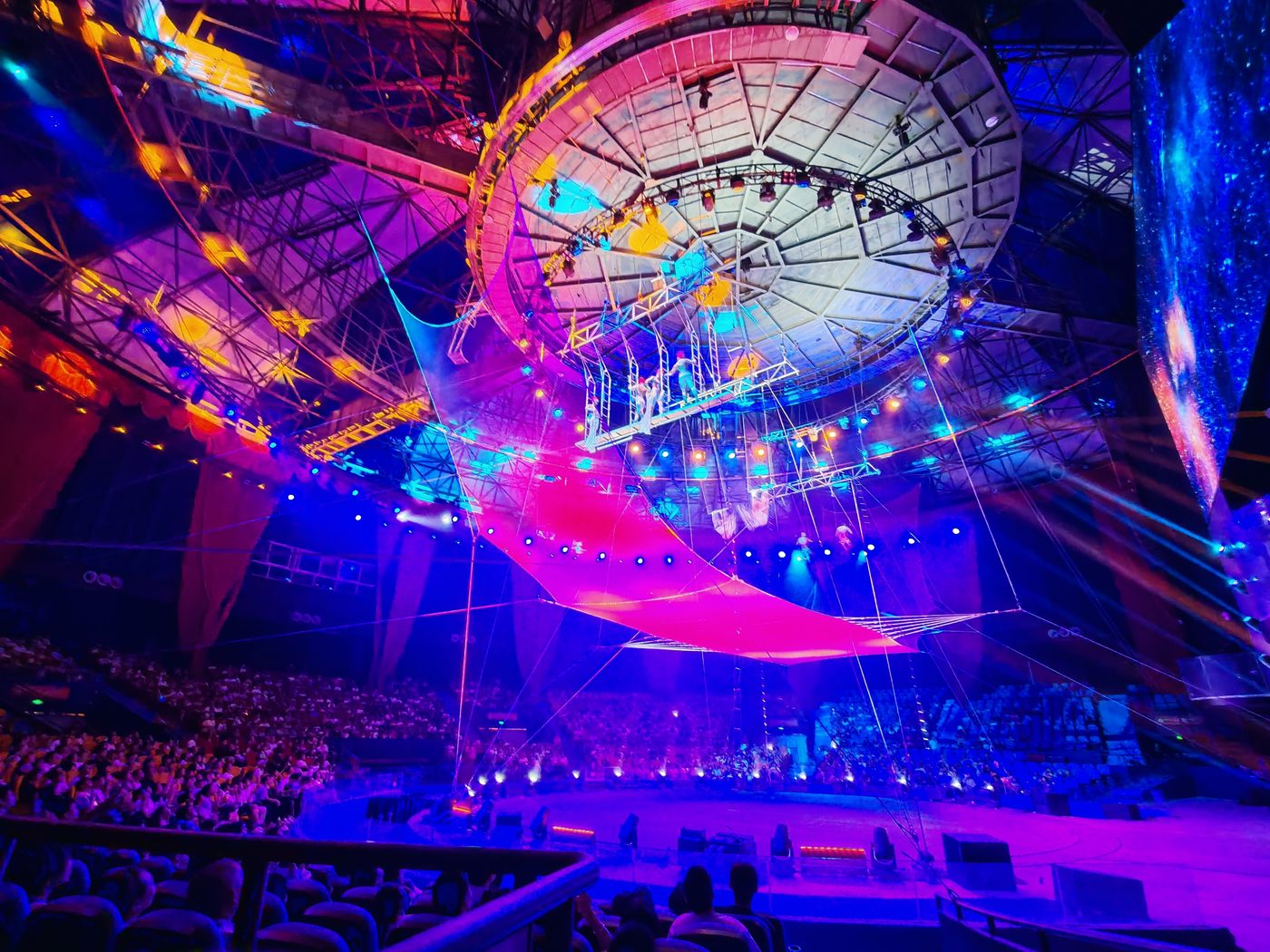
Physical clearances eliminate more circus projects than budget does. A full grand circus programme needs the following:
| Clear height 净高 | ≥ 12 m overall; ≥ 15 m if the programme includes the Wheel of Death |
|---|---|
| Performance area 表演区 | ≥ 15 m × 12 m |
| Floor load 承重 | ≥ 5 t/㎡ |
| Power 用电 | 380 V / ≥ 150 kW on a dedicated circuit |
| Seating 观众席 | ≥ 800 seats preferred |
| If you have no hall 无馆可用 | Hard-standing site ≥ 60 m × 45 m for a 1,000-seat big top — built in 5–7 days, struck in 3 |
Measure ceiling height and floor load before you ask for a quote. They are the two numbers that most often kill a project after a producer has already spent money on planning — and both are cheap to verify at the start.
第三步:明确双方各干什么Step 3 — Fix who provides what
A well-run engagement is turnkey on the production side. In practice the split is:
- The partner provides: the site, the audience, and one local contact who can assist with filings.
- The producer provides: the cast, the apparatus, the technical crew, the safety officer, and the whole chain — site survey, technical plan, licensing assistance, load-in, rehearsal, performance and teardown.
Write this split into the contract rather than assuming it. The failure mode is not a bad show — it is discovering three weeks out that each side thought the other was filing the paperwork.
第四步:倒排时间Step 4 — Work backwards from the date
- 3–6 months out. Site survey, technical plan, quotation and contract. For a fixed festival or holiday date this is the window that avoids rush freight and premium crew rates.
- 5–15 working days. Airspace approval, if the programme includes a drone light show. It is handled end-to-end by the producer inside China; overseas it follows the destination country's rules.
- 5–7 days. Load-in and build for the big-top configuration.
- Rehearsal. Build the rehearsal window into the schedule, not into opening day.
- 3 days. Strike and site restoration.
第五步:合同里最常被漏掉的六项Step 5 — The six contract items people forget
- Weather protocol. Who decides to cancel, at what threshold, and what happens to the money. High-altitude and water-based acts need hard cut-off values written in, not a good-faith promise.
- Insurance. Performance liability and third-party liability — confirm the limits, and confirm they apply in your jurisdiction.
- Licensing responsibility. Name which party files what, with dates.
- Power and site works. The dedicated circuit, the load-in route, and who pays for any enabling works.
- Cast logistics. Visas, accommodation, transport and per-diem are real line items in an international booking and are easy to leave ambiguous.
- Teardown and restoration. The date, and the standard to which the site is returned.
第六步:怎么判断一个制作方靠不靠谱Step 6 — How to judge a producer
Four questions separate a production company from a booking agent:
- Is the cast their own? A company with its own performers and repertoire can guarantee the show on the date. An assembled line-up cannot.
- Can they do both formats? Residency experience means they can hold a nightly rhythm; touring experience means they can build, run and strike a site. You want both.
- Will they show the safety documentation? Inspection records, certification coverage, emergency procedures. Ask to see them before signing, not after.
- Do they take the paperwork seriously? A producer who talks about licensing, fire compliance and airspace clearance unprompted has done this before.
一个晚上可以装几台节目Combining shows into one evening
The three programme types have different footprints, which is what makes them combinable. A destination can run a grand circus in a theatre, then a drone sequence over the site, then a water show — three separate audience draws across one night.
| Programme | Venue requirement | Weather dependence |
|---|---|---|
| Grand circus | Theatre or arena; ≥ 12 m clear, 380 V / 150 kW | Low — indoors |
| Drone light show | Launch area 30 × 20 m, audience ≥ 100 m, clear airspace | High — wind and rain |
| Flyboard water show | Water ≥ 40 × 30 m, depth ≥ 1.5 m, or a built 12 m+ pool | High — wind and water conditions |
常见问题Frequently asked questions
How far in advance should we book?
Three to six months for a fixed festival, holiday or opening date. That covers the site survey, technical planning, licensing and logistics without rush costs.
What if we have no suitable venue?
A big-top touring configuration needs hard-standing ground of at least 60 m × 45 m. A 1,000-seat tent can be built in 5 to 7 days and struck in 3.
What do we actually have to provide?
The site, the audience, and one local contact for filings. The producer handles the survey, technical planning, licensing assistance, load-in, rehearsal, performance and teardown.
Who carries licensing and insurance?
The producer handles or assists with performance licensing, fire and power compliance, local filings and insurance. The contract should state this explicitly rather than leaving it implied.
Can one production include several different acts?
Yes. A single evening can combine a grand circus programme, a drone light show and a flyboard water show — as separate items or one continuous night-time programme.
把你的场地情况发给我们Send us your venue profile
We assess venues free of charge, and we will tell you plainly if the numbers do not work. Send venue type, clear height, floor load and your target dates to [email protected], or message us on WhatsApp at +86 189 6899 9691.
中文要点
- 先定形式:驻场 / 假期档期 / 单场定制 / 单节目授权,四种采购方式成本结构完全不同
- 场地硬指标:净高 ≥ 12m(含飞轮 ≥ 15m)、表演区 ≥ 15×12m、承重 ≥ 5t/㎡、380V/≥150kW、≥ 800 座
- 没有场馆:≥ 60×45m 硬化地面可搭千座大棚,5–7 天搭建、3 天撤场
- 时间倒排:定档日期前 3–6 个月启动;含无人机的需留 5–15 个工作日空域报批
- 合同别漏:恶劣天气停演阈值、保险责任、审批分工、用电与场地改造、演员签证食宿、撤场复原标准
- 判断制作方:演员是否自有、能否同时做驻场与巡演、安全记录是否愿公开